

Long-term reliability, performance repeatability, traceability, and compliance are common requirements across these markets, where any failure can have major functional, economic, or safety impacts.
Within the Electronics activity, this requirement translates into quality being embedded from the earliest stages, at the very core of processes and operational skills.
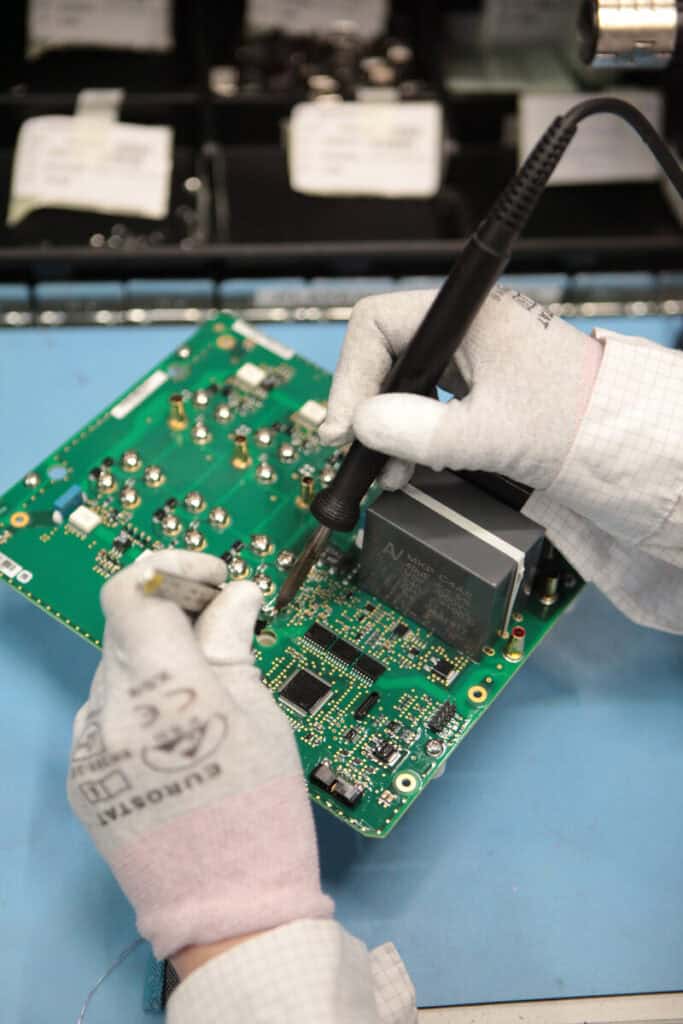
Mastered processes to secure critical functions
In electronic assembly, final quality depends directly on the control of critical operations and the stability of processes.
Soldering, handling of miniaturized components, and assembly of high-density boards: every operation contributes to the reliability and durability of equipment.
This level of control is essential for:
- HBAS, requiring service continuity and interoperability,
- Industry, operating in demanding environments,
- Aerospace & defense, where compliance and reliability are critical,
- Automotive, subject to high requirements for robustness and repeatability.
Internal training as a lever for standardization and risk reduction
To ensure consistent and reproducible quality, Electronics relies on internal training directly aligned with industrial challenges and deployed at the heart of its production sites.
This approach enables the long-term embedding of quality standards such as IPC‑A‑610 and secures their rigorous application across all production lines.
Beyond knowledge transfer, training aims to:
- standardize operations and methods,
- reduce process variability,
- prevent non-quality at its source,
- secure sensitive phases such as NPI (New Product Introduction) and ramp-up.
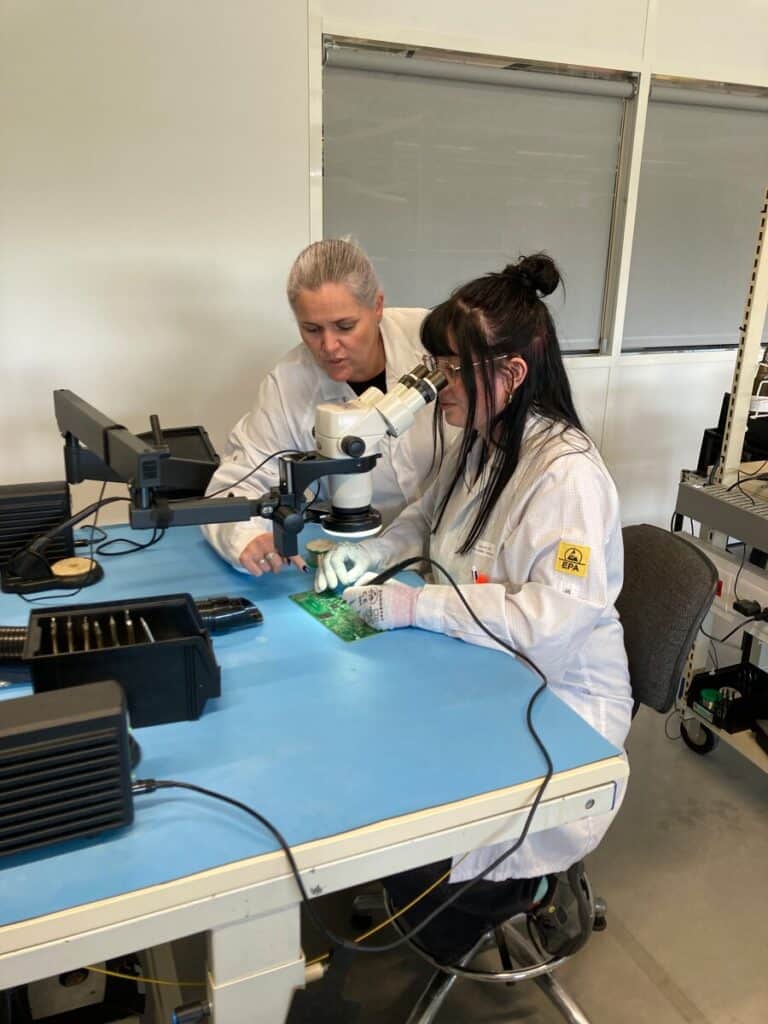
A quality requirement anchored in the reality of customer products
Industrial quality delivers its full value when it is aligned with the real constraints of products. This is why training systems are integrated as closely as possible to the workshops and are based on:
- boards and architectures representative of customer products,
- equipment and technologies actually used in production,
- concrete cases drawn from the addressed markets.
This proximity ensures immediate application on the shop floor and limits gaps between formal requirements and actual field performance.
An evolving requirement, aligned with market transformations
HBAS, industry, automotive, and aerospace & defense markets are evolving rapidly, both technologically and regulatorily.
Industrial quality must therefore continuously adapt, notably by evolving skills and operational practices in line with market developments.
In this respect, internal training is a strategic tool to sustainably support customers in high value-added segments.
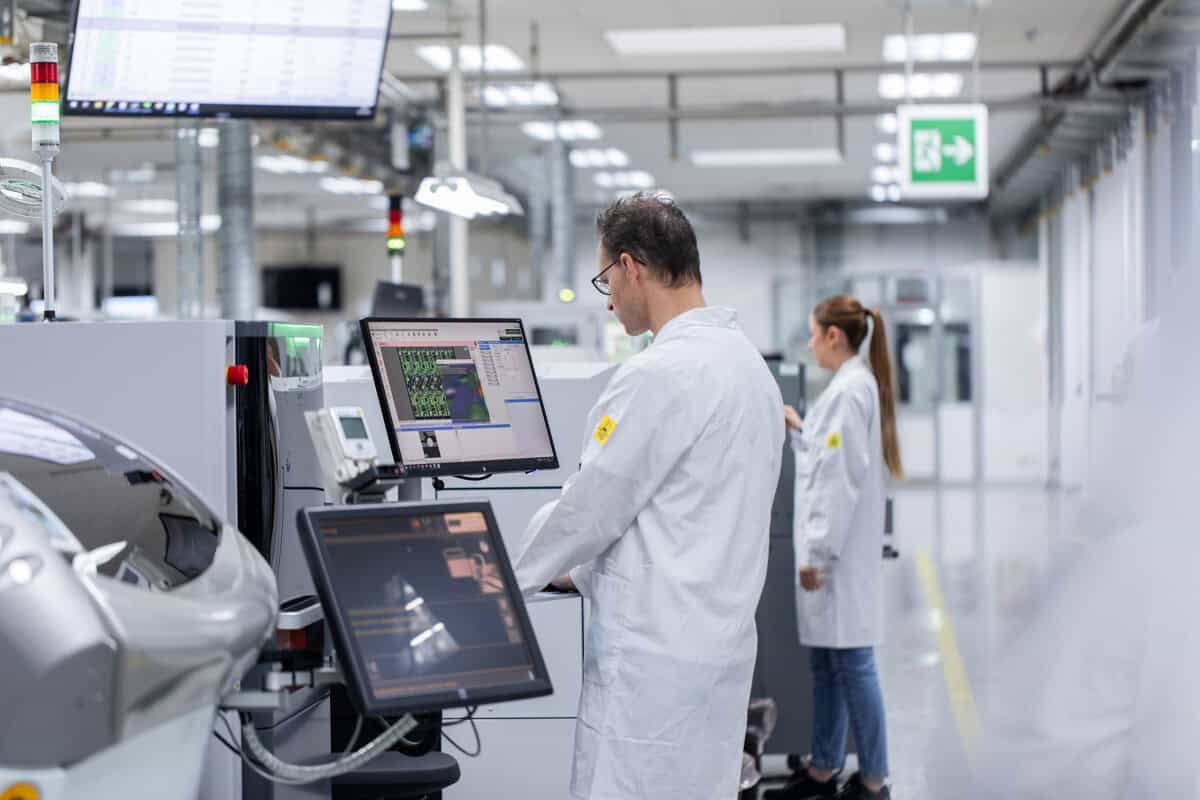
Industrial quality: the first customer commitment
By placing process control, standardization of practices, and continuous development of skills at the heart of its industrial model, Electronics activity secures the reliability of the equipment entrusted by its customers and supports them over the long term in the most demanding markets.