

1. Grow positive impact business
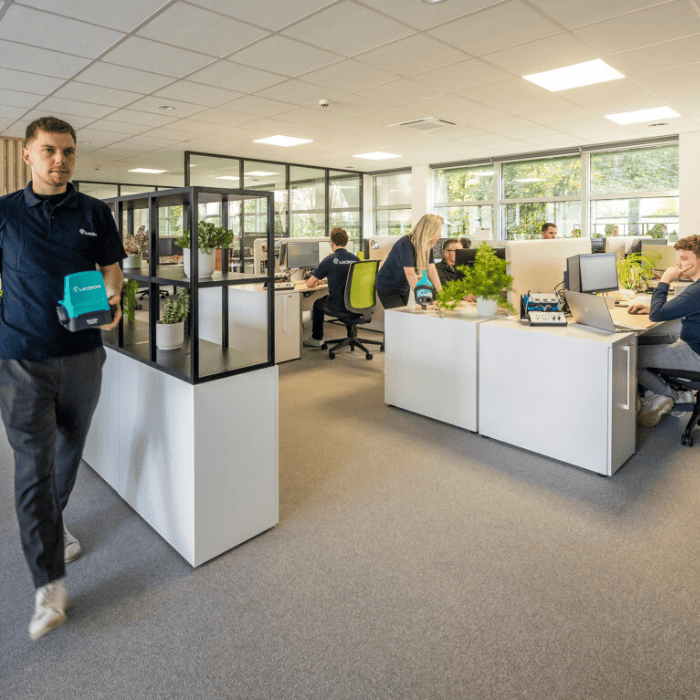
The Impact Score is an internal tool used to assess the contribution of products to the ecological transition.
Based on the European taxonomy and the work of the IPCC, it classifies each product into three categories: excluded, neutral or impactful.
Deployed across all Electronics activities, it is integrated into “bid / no‑bid” decisions and enables the monitoring of the share of impactful products in revenue.
In 2025, these products represent 74% of revenue. The objective is to accelerate the development of high positive-impact applications (heat pumps, remote management of water and public lighting networks, air purifiers, etc.) to reach 80% by 2030.
2. Design eco-efficient solutions
LACROIX’s ambition is to become a benchmark player in eco-design in its markets by 2030.
Since 2025, the integration of eco-design has been systematized in the development of all new products. Life cycle assessments (LCAs) are carried out and complemented by an eco-design report, in order to assess and reduce their environmental impact over their entire life cycle.
For the Electronics activity, this approach is accompanied by the provision of a reliable, traceable and comparable Product Carbon Footprint (PCF), meeting growing expectations in terms of transparency and decarbonization.
A new objective is now set for 2030: 100% of new products rated A or B according to an internal eco-design performance scale.
3. Run sustainable and resilient operations
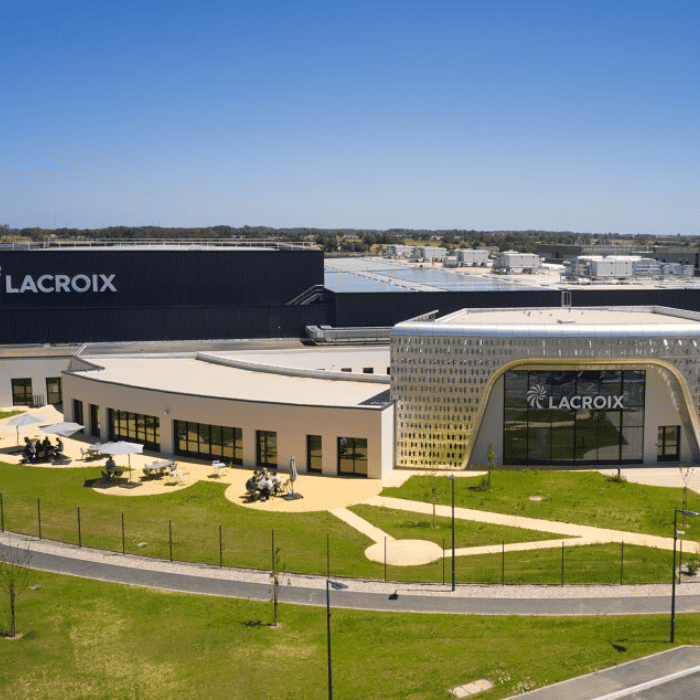
LACROIX is committed to reducing the environmental footprint of its operations by integrating eco-responsible practices across its entire value chain, at all its sites and in its processes.
The Group has defined a low-carbon trajectory and has committed to the Science Based Targets initiative (SBTi) for the next ten years. Validated in 2025, this trajectory sets ambitious targets for 2033: –55% GHG emissions on scopes 1 & 2 and –61% on scope 3 (vs 2023).
At the same time, an initial CSR assessment of strategic suppliers was carried out to measure their level of maturity on environmental, social, ethical and health & safety issues. This approach is based on the Sustainable Supplier Index, a structured and standardized evaluation framework.
A target is set for 2030: 75% of purchasing must reach a minimum level on this index, making the supply chain a key lever. Learn more about our responsible purchasing strategy
4. Commit to our people & act locally
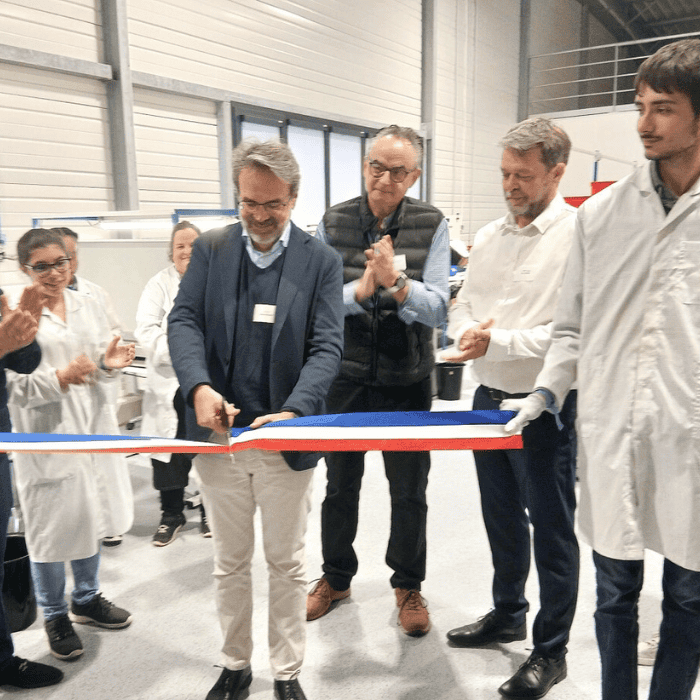
Respect for fundamental rights is at the heart of LACROIX’s values and is reflected in attention to employee engagement, well-being and development.
This approach is notably based on Great Place To Work®, which makes it possible to measure and improve the employee experience. A target is set for 2030: 100% of sites certified GPTW.
At the same time, the Committed Site approach aims to embed the strategy through measurable local actions at each site.